Your browser (Internet Explorer) is out of date and may not display all features of this and other websites. Please use Google Chrome or Microsoft Edge for optimal experience of our website.
Like all industries reliant on heavy machinery, in the dynamic and demanding world of wood processing, operational efficiency and equipment reliability are paramount. Recognizing this, and the fact that few
For the foreseeable future, relatively inexpensive, widely abundant and accessible renewable biomass energy sources are set to be key drivers in fossil-fuel transitions. Making the most of raw materials is
A circular carbon economy is in the sights of many a heavy industry and global government. According to the International Energy Agency (IEA), by 2030, renewable fuels are set to
Climates are changing, and the interface between land and sea is experiencing some of its most extreme effects; port terminals need to be ready for more climatic turmoil, and have
Global ports are facing unsettled times. Hesitation in world trades, along with rising interest rates, geopolitical tensions and slow growth in many economies, mean that for ports to survive, adaptability
At Bruks Siwertell, we believe that inclusion is not just a value, it is practice. Between 5th and 9th May, we held a dedicated Inclusion Week, providing a Group-wide opportunity to learn and reflect upon what it truly means to build a workplace where everyone feels welcomed, respected, and empowered.
Age is not just a number when it comes to port equipment; with 80 percent of global trade passing through port terminals, they are the gatekeepers of growth, and their
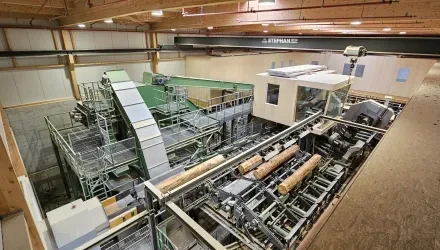
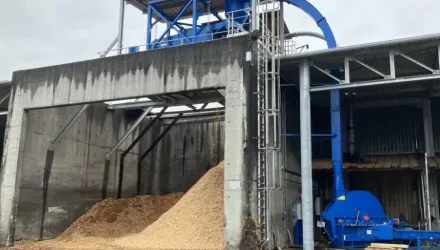
Industrial sawmills are highly efficient process-driven facilities. But even for cutting-edge installations, processing boards or planks results in as much as half of a log being classified as byproduct. The
The transformation of bulk sulfur handling at Paradeep in India, is testament to the impact of adopting innovative solutions; with each new installation, Siwertell ship unloading technology is not just
Modern sawmills are highly efficient, process-driven facilities, where unplanned interruptions to operations can have a significant impact on production yields. A critical part of their process efficiency is the byproduct