Bruks-Siwertell
Coal: why through-ship efficiency matters now more than ever
28 Jan 2026Despite long-term decarbonisation goals, coal remains deeply embedded in global energy and industrial supply chains. Long-term forecasts indicate that demand will gradually plateau and begin to decline towards 2030, but it looks to be a protracted goodbye, with fluctuating climates, fuel prices and policy decisions all influencing worldwide demand.
Southeast Asia represents the fastest-growing coal market globally; India continues to expand coal capacity to meet its growing electricity needs; while China consumes more coal than the rest of the world combined, notes the International Energy Agency (IEA).
Through-ship efficiency: the real KPI
When energy markets tighten and vessels queue at the berth, what matters most is how quickly a ship can be emptied and underway, safely, cleanly and consistently. This is where through-ship efficiency becomes the defining metric and key performance indicator (KPI).
Traditional grab cranes look productive initially, but their performance drops as unloading progresses. As cargo levels fall, cycle times increase, fill factors decline and efficiency steadily erodes. Spillage and dust only add to the problem.
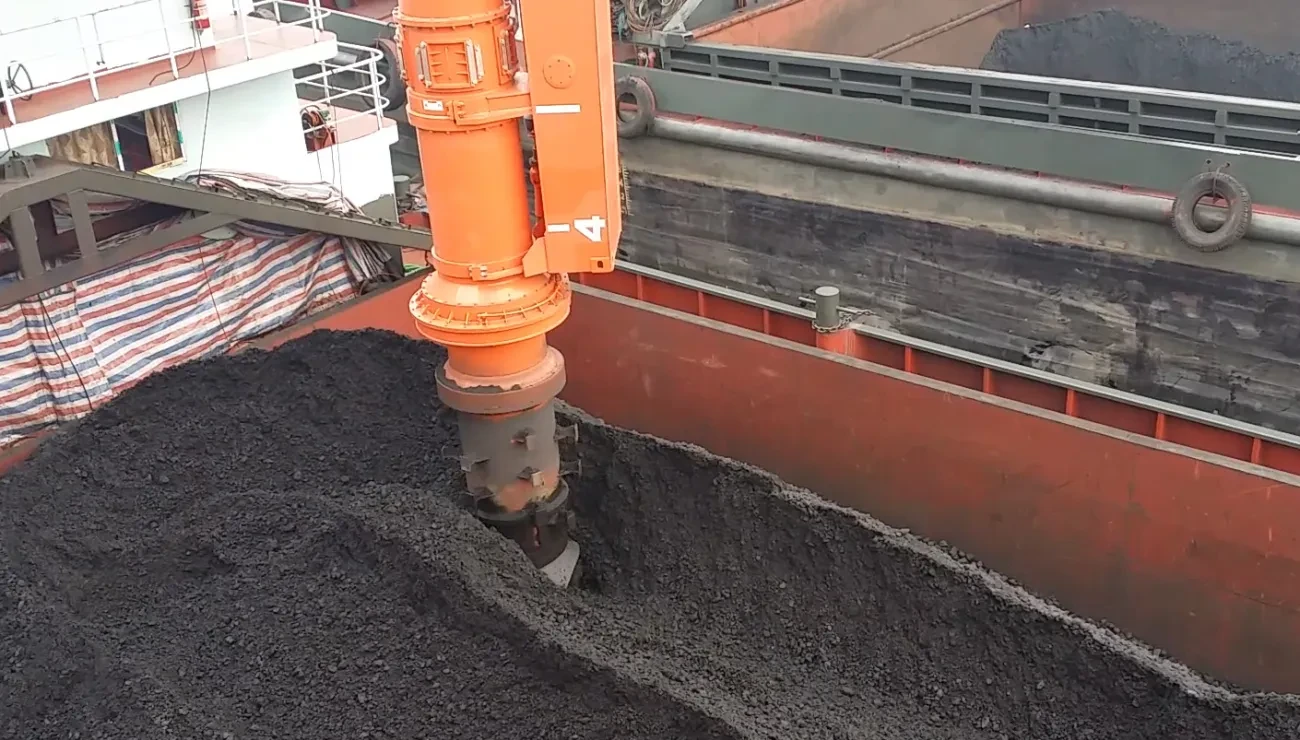
Siwertell screw-type ship unloaders work differently. Their continuous unloading principle delivers a steady discharge rate from the first ton to the final clean-up. Cargo level in the hold does not dictate through-ship performance, and neither does cargo type.
In real-world operations, this translates into average through-ship efficiencies of 70 percent or more, compared with around 50 to 60 percent for grabs. For example, a performance test was carried out with two Siwertell unloaders, each with a rated capacity of 2,200t/h, discharging an 80,000 dwt vessel fully loaded with coal. The unloaders delivered an average capacity above 77 percent.
Faster unloading means shorter berth stays, lower demurrage costs, more predictable operations, and higher jetty utilization rates and terminal productivity.
Experience benefits new installations
Decades of coal handling experience with continuous Siwertell screw-type ship unloaders are proving critical to making new and existing coal handling operations as sustainable as possible.
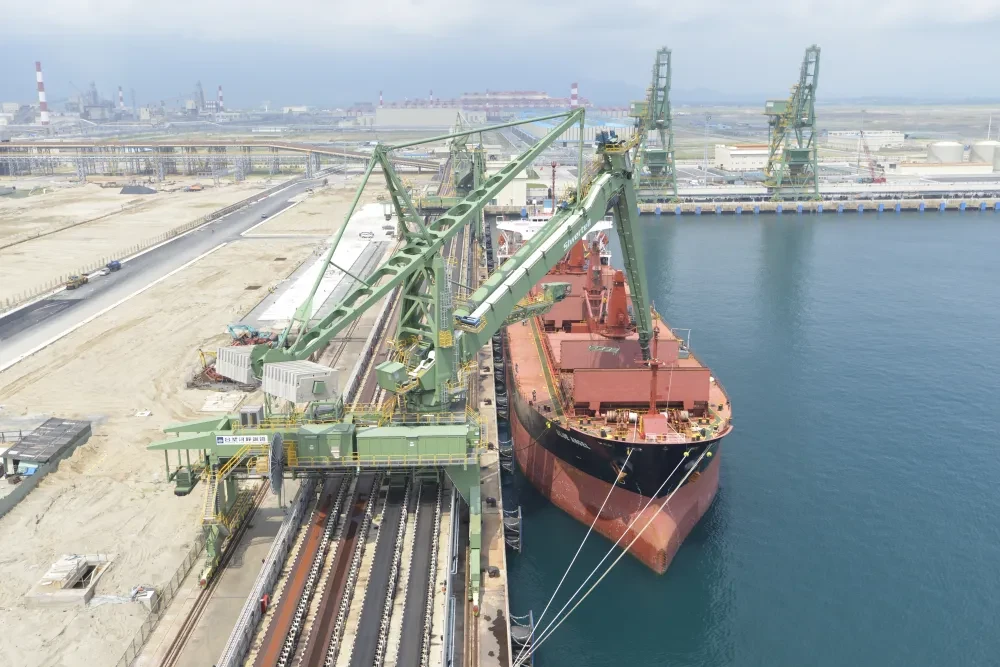
For example, two large-scale Siwertell ST 790-D-type ship unloaders now serve a newly developed ultra-supercritical power station in southern China, ensuring clean and efficient coal handling for their new owners.
In addition to their low weight, which minimized the load on the jetty, delivering significant cost savings in jetty construction, the Siwertell ship unloaders, deliver market-leading through-ship capacities. These new units are rail-mounted and offer a continuous rated coal handling capacity of 1,800t/h, with a peak capacity of 2,000t/h, discharging vessels of up to 100,000 dwt.
Environmental pressure accelerating the shift
Coal handling has come under intense environmental scrutiny, and rightly so. Dust emissions, spillage and noise pollution are no longer tolerated at many ports, especially those close to population centres.
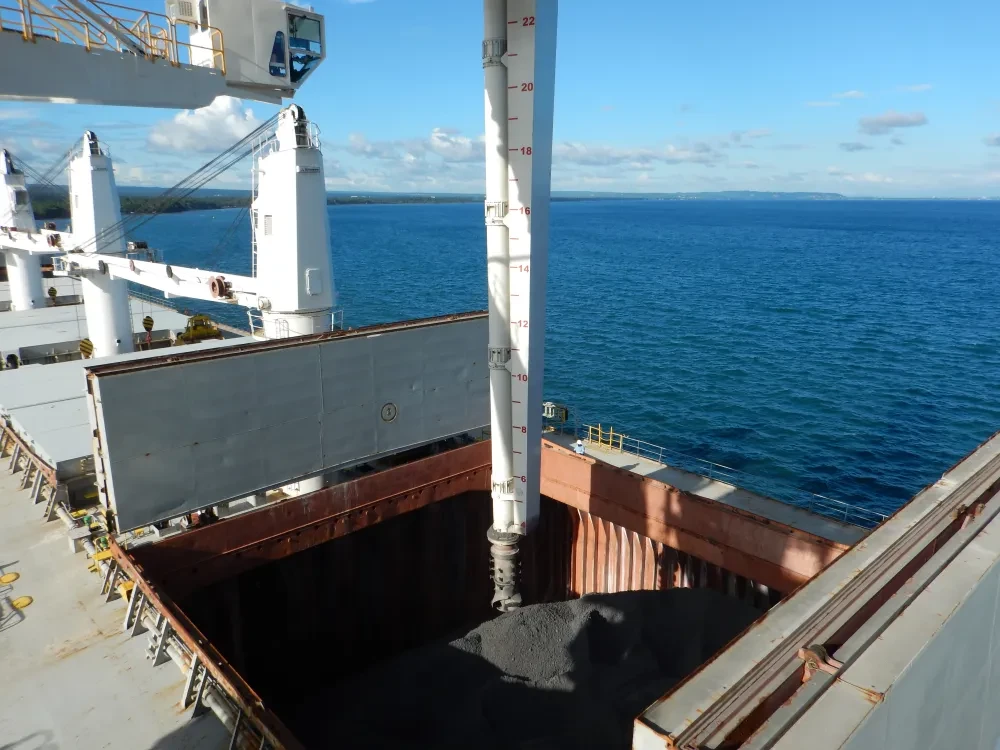
Siwertell ship unloaders are totally enclosed from the moment material enters the inlet feeder below the cargo surface until it reaches the jetty conveyor. There is no spillage and virtually no fugitive dust. They are also quiet neighbours for urban centers.
This environmental performance is no longer a ‘nice to have’, for many terminals, it is what will make future operations possible at all.
Transition-ready: coal today, biomass tomorrow
More port terminals are being asked to ready for potential change: handle coal today, but maybe biomass tomorrow, often using the same port terminal technology. This shift is changing how operators think about the long-term flexibility and efficiency of their ship unloading equipment.
Siwertell technology’s capability to switch between fuels has been proven at facilities such as Drax Power Station in the UK, which has transitioned from coal to become the country’s largest renewable electricity generator. Siwertell ST 790-D unloaders at Immingham and Liverpool were originally installed for coal and now discharge millions of tons of biomass annually. Similar success stories can be found in Denmark, Singapore and across Asia, where coal and biomass are handled seamlessly within the same infrastructure.
While co-firing coal with biomass, or converting plants entirely to biomass, has become a practical and widely adopted pathway for reducing carbon intensity without abandoning existing infrastructure, it creates a unique challenge.
Port terminals are required to have unloading systems that are robust enough to handle abrasive, sticky and high moisture content coals, but also switch to sensitive cargoes like biomass pellets, which are fragile, dusty and prone to self-ignition. Furthermore,
biomass has roughly half the density of coal and around two-thirds of its calorific value, requiring significantly higher volumes to achieve the same energy output.
Unique design capabilities
Siwertell ship unloaders offer several advantages. If a terminal is currently feeding coal to boilers, a Siwertell ship unloader can handle it. If the power generator wants to co-fire, the unloader can handle both coal and biomass, and when ready, the ship unloader can very efficiently discharge pure biomass, in several forms, from palm kernels and wood chips to dense, wood pellets.
Siwertell ship unloaders mitigate the self-ignition risk that accompanies all biomass with a unique, integrated safety system, which incorporates detection measures including thermal cameras, temperature and pressure sensors and spark detectors. In the event of an explosion, fast-acting valve technology prevents it propagating downstream, while emergency discharge, directly to trucks, stops damaged cargo being transported any further. Globally, Siwertell ship unloaders have clocked up around 100,000 operational hours of discharging biomass.
Preparing for what comes next
The energy transition is not linear. Coal demand may decline in some regions while increasing in others. Biomass may grow, diversify, or be complemented by other alternative fuels. What remains constant is the need for reliable, environmentally sensitive, high-performance ship unloading technology.
Siwertell ship unloaders are unique on the market, offering the only safe, high-capacity, continuous, totally enclosed biomass handling. They are designed not just for today’s coal operations, but for the realities of tomorrow’s energy landscape.
PLEASE CONTACT US FOR MORE INFORMATION